Key points
Read this first if you are trying to decide whether this topic applies to your symptoms or reports.
- Some spinal pains do not fit a mechanical pattern.
- Imaging often answers the question.
- The surgical principle is microsurgical separation: identify the plane between the tumor and the healthy spinal cord, work within that plane under microsurgical magnification, and preserve every fiber that can be preserved.
What this means
Some spinal pains do not fit a mechanical pattern. They wake the patient at night, do not change with movement, and persist despite rest. When this kind of pain is heard carefully, the next question is whether something inside the spinal canal — including a tumor — is causing it.
How it is evaluated
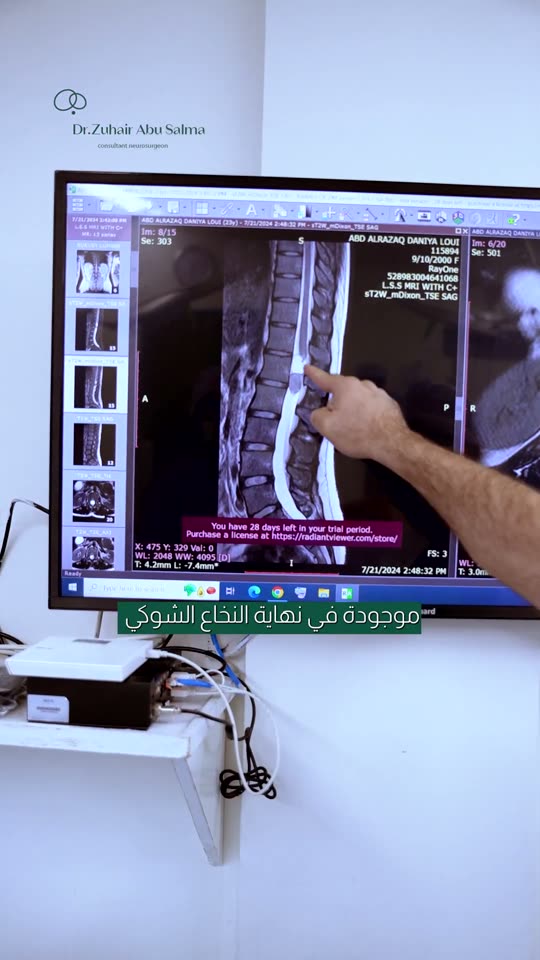
Imaging often answers the question. An MRI can show a lesion near the end of the spinal cord, sometimes with a solid part and a cystic component. Its position close to delicate areas that control bladder, bowel, and leg movement makes pre-surgical planning critical.
How treatment is discussed
The surgical principle is microsurgical separation: identify the plane between the tumor and the healthy spinal cord, work within that plane under microsurgical magnification, and preserve every fiber that can be preserved. Intraoperative neurological monitoring adds a real-time safety check.
When to seek urgent care
Do not wait for a routine clinic appointment if symptoms are sudden, severe, or rapidly worsening.
- New or worsening weakness in an arm or leg.
- Loss of bladder or bowel control, or numbness around the saddle area.
- Severe headache, confusion, seizure, or sudden vision changes.
What to bring or send before the visit
Good preparation helps the clinic understand the case faster and avoids repeating tests when recent reports are already available.
- Recent MRI, CT, X-ray, or nerve test reports, plus the images if available.
- A short timeline: when symptoms started, what changed, and what makes them worse or better.
- Current medications, previous surgeries, and any medical conditions the doctor should know about.
Send a short description of symptoms and any recent images or reports.
Common patient questions
When should I discuss spinal cord tumor microsurgery: separating the tumor while protecting function with a neurosurgeon?
If symptoms are persistent, worsening, linked to weakness or numbness, or if MRI/CT reports mention a spine, spinal cord, or nerve concern, a specialist review can help connect the symptoms with the images.
What should I send before requesting an appointment?
Send a short description of symptoms, when they started, and recent MRI or CT reports, plus any images if available.