





Spine and herniated disc problems
Back or neck pain accompanied by pain or numbness in the arms or legs, spinal stenosis, herniated discs (slipped disc), vertebral instability, spinal deformities, and spine or spinal cord tumors.
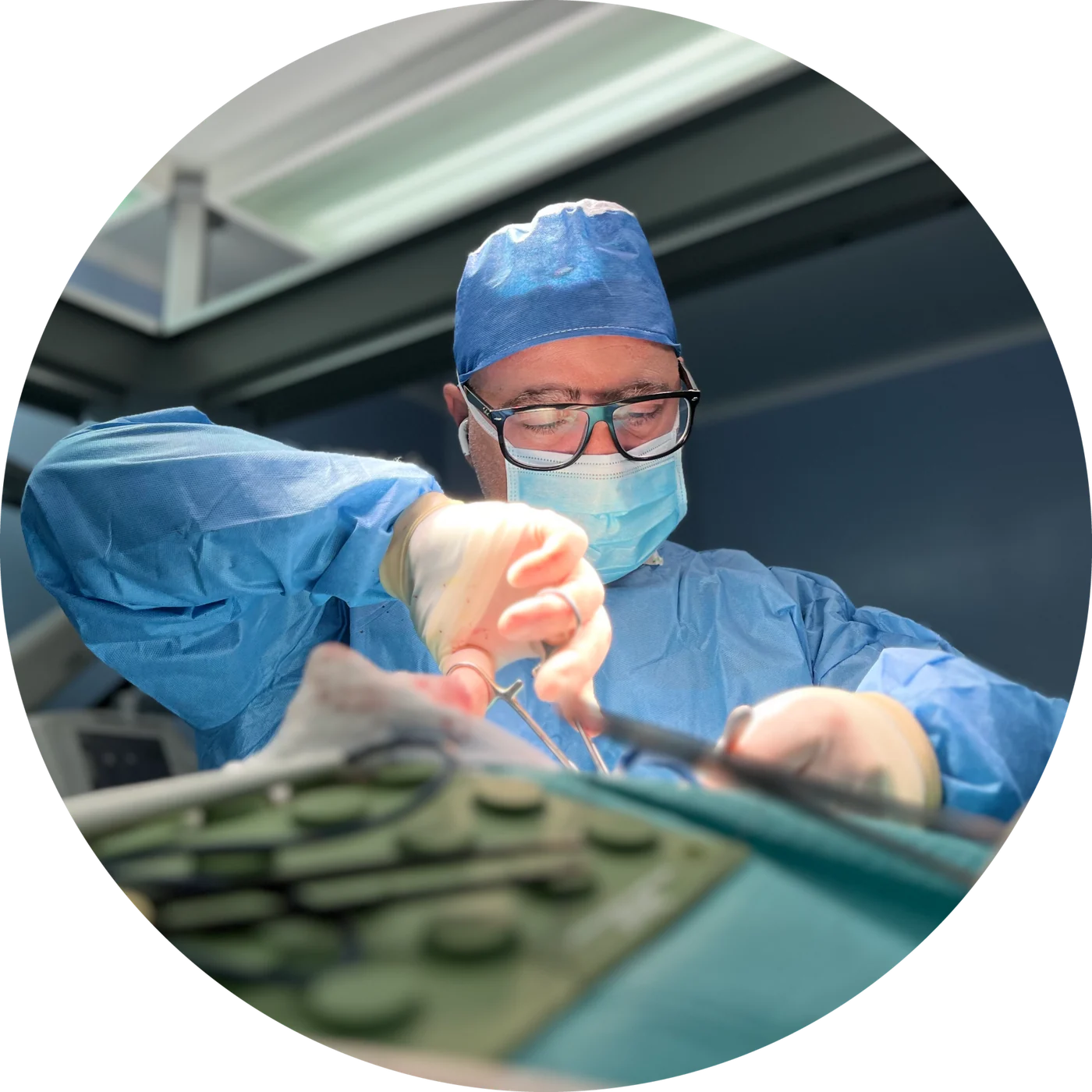
He has over 25 years of clinical and surgical experience and previously served as Head of the Department of Neurosurgery at the Jordanian Royal Medical Services.
He earned his Bachelor of Medicine and Surgery (M.B.B.S.) from the University of Jordan and completed his neurosurgery residency at King Hussein Medical Center. He is board-certified by the Jordanian Board of Neurosurgery.
He completed advanced fellowship training at Sainte-Anne Hospital in Paris, France — focused on brain surgery, epilepsy surgery, and movement-disorder surgery — alongside specialized courses in skull-base and minimally invasive neurosurgery.
Today he cares for patients with brain, nerve, and spine conditions at his private clinic on Al-Khalidi Street, Amman. His approach emphasizes accurate diagnosis, an individualized plan, and treatment tailored to your specific condition.
1990– 1996
Medical School
The University of Jordan
Bachelor of Medicine and Surgery (M.B.B.S.)
1996– 1997
Internship
Queen Alia Hospital, Amman
1998– 1999
General Practice
Al al-Bayt University
General practitioner
1999– 2005
Residency
King Hussein Medical Center (KHMC), Amman
Neurosurgery
2006
Board Certification
Jordanian Board of Neurosurgery
Neurosurgery
2007– 2009
Fellowship
Sainte-Anne Hospital, Paris, France
Brain, epilepsy, and movement-disorder surgery
2009– 2021
Specialist & Head of Department
King Hussein Medical Center / Royal Medical Services
Neurosurgery
2022– Present
Private Practice
Vetro Medical Complex, Al-Khalidi Street, Amman
Consultant neurosurgeon
1990– 1996
Medical School
The University of Jordan
Bachelor of Medicine and Surgery (M.B.B.S.)
1996– 1997
Internship
Queen Alia Hospital, Amman
1998– 1999
General Practice
Al al-Bayt University
General practitioner
1999– 2005
Residency
King Hussein Medical Center (KHMC), Amman
Neurosurgery
2006
Board Certification
Jordanian Board of Neurosurgery
Neurosurgery
2007– 2009
Fellowship
Sainte-Anne Hospital, Paris, France
Brain, epilepsy, and movement-disorder surgery
2009– 2021
Specialist & Head of Department
King Hussein Medical Center / Royal Medical Services
Neurosurgery
2022– Present
Private Practice
Vetro Medical Complex, Al-Khalidi Street, Amman
Consultant neurosurgeon
Dr. Zuhair’s research has been published in peer-reviewed international neurosurgery journals, including Neurosurgery, as well as regional journals.
Neurosurgery
Journal of the Royal Medical Services (Jordan)
Neurochirurgie (French Society of Neurosurgery)
Verified profiles on independent medical and professional platforms, alongside the published research — references any patient or search engine can check.

NatHealth
+962 6 5511010

MedNet
+962 6 5376969

Euro Arab Insurance
+962 6 5518935

GIG (Gulf Insurance Group)
+962 6 5609888

Jordan Engineers Association
+962 6 5000900

Solidarity
+962 6 5777555

Jordan Bar Association
+962 6 5608440

Social Security Corporation

Omni Care

Islamic Insurance
+962 6 5661300
Insurance coverage varies from one patient to another, depending on the terms of each patient's insurance policy and contract.
These are common reasons patients may contact the clinic. They are not a diagnosis; the correct next step depends on clinical examination and imaging review.
Back or neck pain accompanied by pain or numbness in the arms or legs, spinal stenosis, herniated discs (slipped disc), vertebral instability, spinal deformities, and spine or spinal cord tumors.
Brain tumors, skull-base lesions, head injuries, brain bleeding, and hydrocephalus.
Compressed or injured nerves, nerve tumors, and selected pediatric neurosurgery cases that require a specialized surgical procedure.
Chronic back, neck, and nerve pain assessed for image-guided options — injections, nerve blocks, radiofrequency procedures, and neuromodulation — when conservative care is not enough.
Bring or send recent MRI, CT, X-ray, nerve-study, or hospital reports if available.
Prepare a short timeline: when symptoms started, what changed, what treatment was tried, and what makes symptoms worse or better.
Expect discussion of conservative care, follow-up, injections, or surgery only when the condition warrants it.
Seek urgent care immediately for new severe weakness, loss of bladder or bowel control, major trauma, sudden severe headache, or reduced consciousness.